Garage slabs, equipment pads, backyard slabs, and commercial slab-on-grade work in Los Angeles. Proper subgrade preparation, appropriate thickness, reinforcement, and finishing based on intended load and use.
Concrete slabs serve a range of purposes — from garage floors and storage areas to equipment pads, workshop surfaces, and commercial loading areas. The critical difference between a slab that performs well and one that cracks, settles, or deteriorates is the preparation beneath it and whether the thickness and reinforcement match the intended use.
A slab placed on poorly compacted soil, or one that is too thin for the loads it carries, will develop problems regardless of how well the surface is finished. In Los Angeles, soil conditions range from stable sandy loam to expansive clay, and each type requires different preparation to support a concrete slab over time.
Whether you need a utility slab in the backyard, a garage floor, or a commercial equipment pad, each project starts with evaluating the site. As part of our concrete services across Los Angeles, we determine the right preparation, thickness, and reinforcement based on what the slab will actually support.
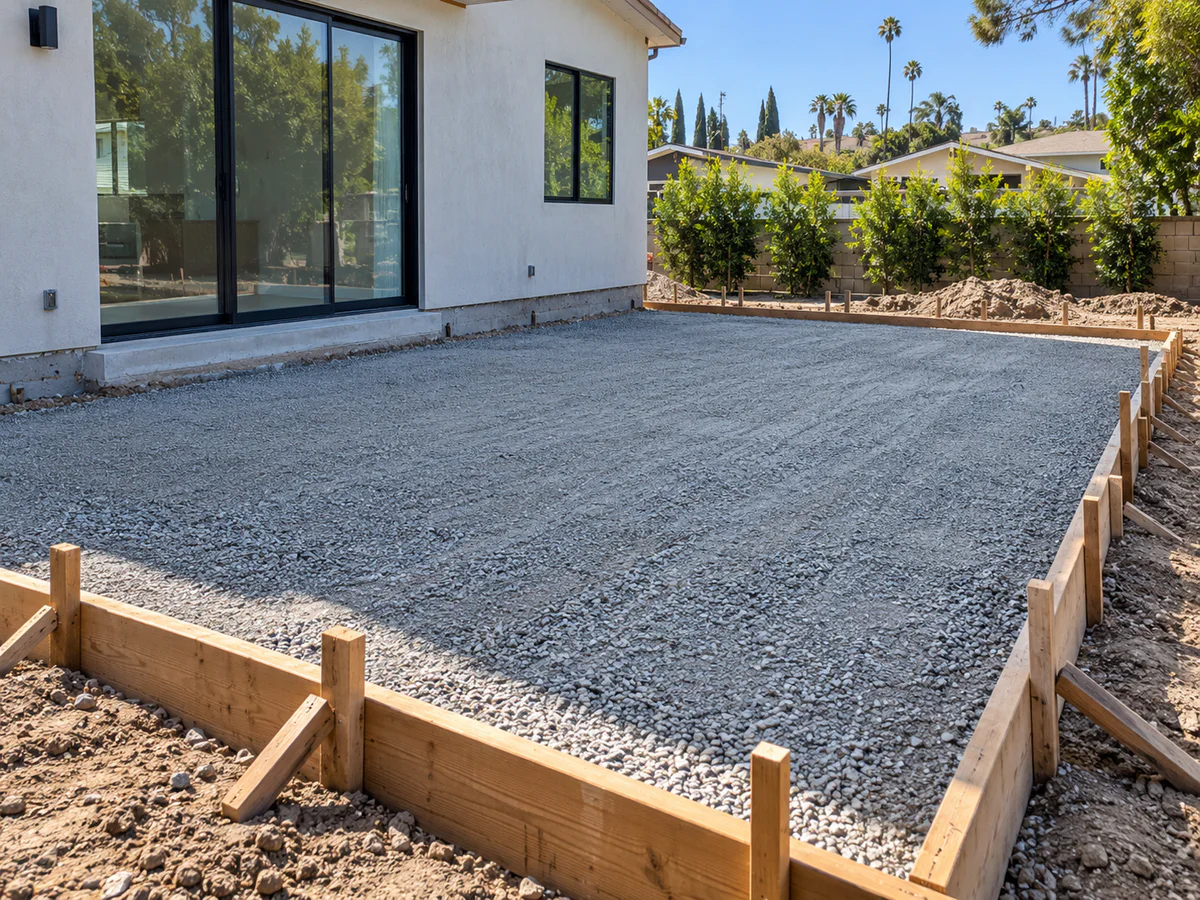
Different applications require different specifications. The intended use determines the slab's thickness, reinforcement, base requirements, and finishing approach.
Garage floor slabs must handle vehicle weight, potential fluid exposure, and daily foot traffic. Proper thickness, reinforcement, and surface finishing are planned around garage-specific use and load requirements.
HVAC units, generators, storage containers, and other equipment require stable, level concrete pads. The pad dimensions, thickness, and location are planned around the specific equipment requirements.
Storage shed bases, workshop floors, and backyard utility surfaces. These slabs may be simpler than structural work but still require proper base preparation and drainage planning.
Commercial slabs often have specific requirements for thickness, reinforcement, load capacity, and finish. These projects may involve coordination with general contractors, engineers, and local building authorities.
When existing slabs have deteriorated beyond repair — from settlement, cracking, or subgrade failure — full removal and replacement with proper base preparation addresses the root cause of the problem.
Slabs that support heavy vehicles, equipment, or significant stored weight require increased thickness, reinforcement, and base preparation. Load analysis informs the appropriate specifications.
There is no single standard thickness or reinforcement for all concrete slabs. A backyard utility slab supporting a small storage shed has fundamentally different requirements than a garage floor supporting vehicles or a commercial pad supporting heavy equipment.
Specifying the wrong thickness or reinforcement for the intended use is one of the most common reasons slabs fail prematurely. A slab designed for foot traffic will crack under vehicle loads. A slab placed on uncompacted fill will settle regardless of its thickness.
For related structural work, see our foundation concrete services. For surface damage evaluation, see our concrete repair page.
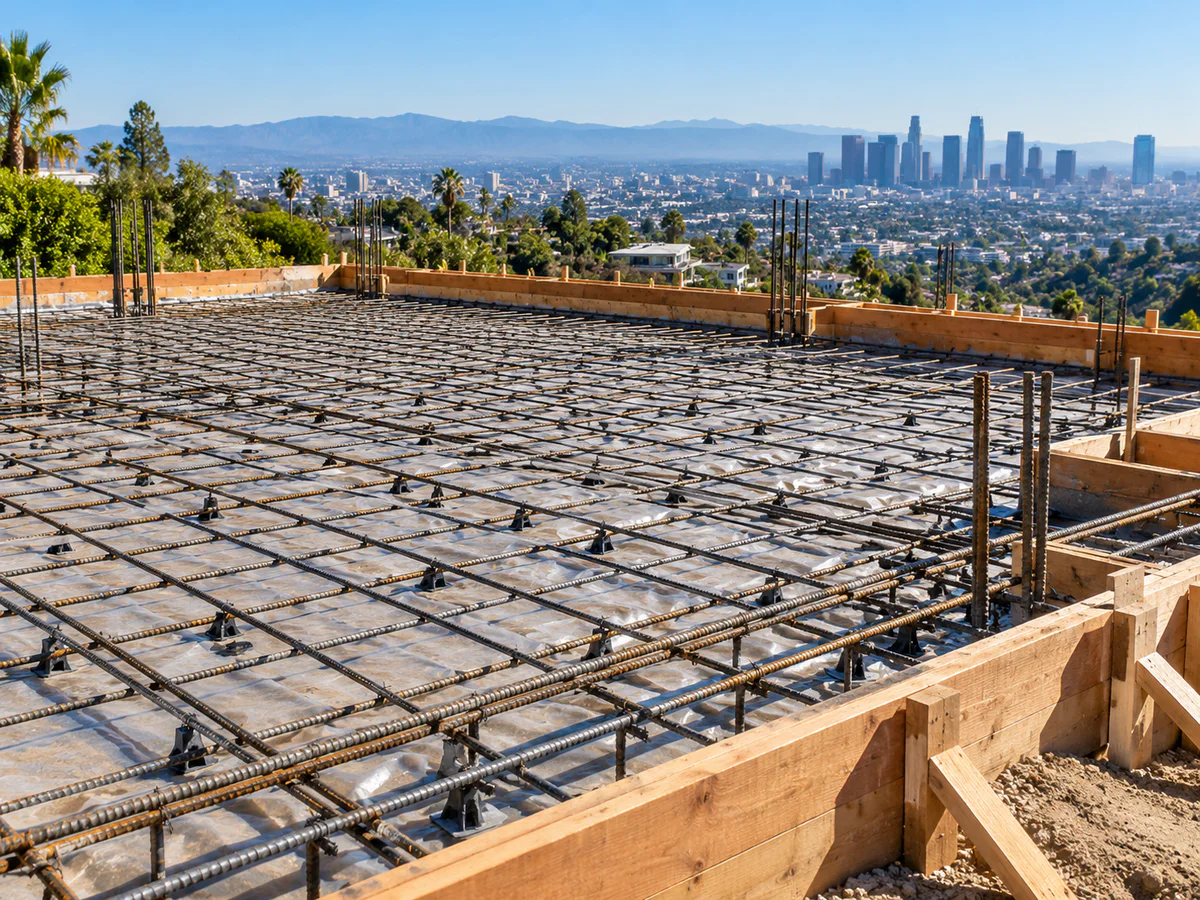
Each slab project follows a structured process calibrated to the specific load, use, and site conditions of your project.
Evaluate the site conditions, intended use, anticipated loads, and soil to determine the appropriate slab specifications.
Excavate to the proper depth, grade the subgrade, place and compact base material to support the slab long-term.
Set forms to planned dimensions and grade. Place reinforcement based on the slab's load requirements and specifications.
Place concrete, consolidate, screed, apply the selected finish, cut control joints, and protect during curing.
Slab thickness depends on intended use and load requirements. A backyard utility slab has different thickness needs than a garage slab or a commercial equipment pad. The appropriate thickness is determined during the site evaluation based on anticipated loads, soil conditions, and project specifications.
A slab provides a flat working surface and may or may not carry structural loads. A foundation is specifically designed to support the weight of a structure above it and is subject to structural engineering requirements. Some projects combine both — a foundation slab serves as both the structural support and the floor surface.
Garage slab cracking results from subgrade settlement, insufficient thickness for vehicle loads, poor compaction, rapid curing, or control joints placed too far apart. If the original slab was not designed for the loads it carries, cracking is expected over time.
Yes. The existing concrete is demolished and removed, the subgrade is evaluated and re-prepared, and new concrete is placed with appropriate specifications for the intended use. Full replacement is common when the original slab has widespread cracking, settlement, or subgrade failure.
Whether you need a garage slab, equipment pad, backyard slab, or commercial slab-on-grade work — contact our team to discuss specifications and schedule a site evaluation.