New walkways, sidewalk replacement, and concrete path construction for residential and commercial properties in Los Angeles. Proper grade transitions, joint planning, and pedestrian-safe surfaces built for long-term use.
Sidewalks and walkways serve a practical purpose — connecting driveways to entries, guiding foot traffic through yards, and providing safe pedestrian surfaces. When sidewalk concrete deteriorates, cracks, or becomes uneven, it creates safety concerns and reduces the functional quality of the property.
In Los Angeles, sidewalk damage is common. Tree roots push slabs upward, creating uneven surfaces. Settlement from poorly compacted subgrade causes sections to sink. Age, weather exposure, and heavy use wear the surface. When sidewalk sections fail, the cause needs to be identified before deciding whether repair or replacement is the right approach.
Our local concrete contracting services include sidewalk evaluation, section replacement, and full walkway construction for residential and commercial properties throughout Los Angeles.
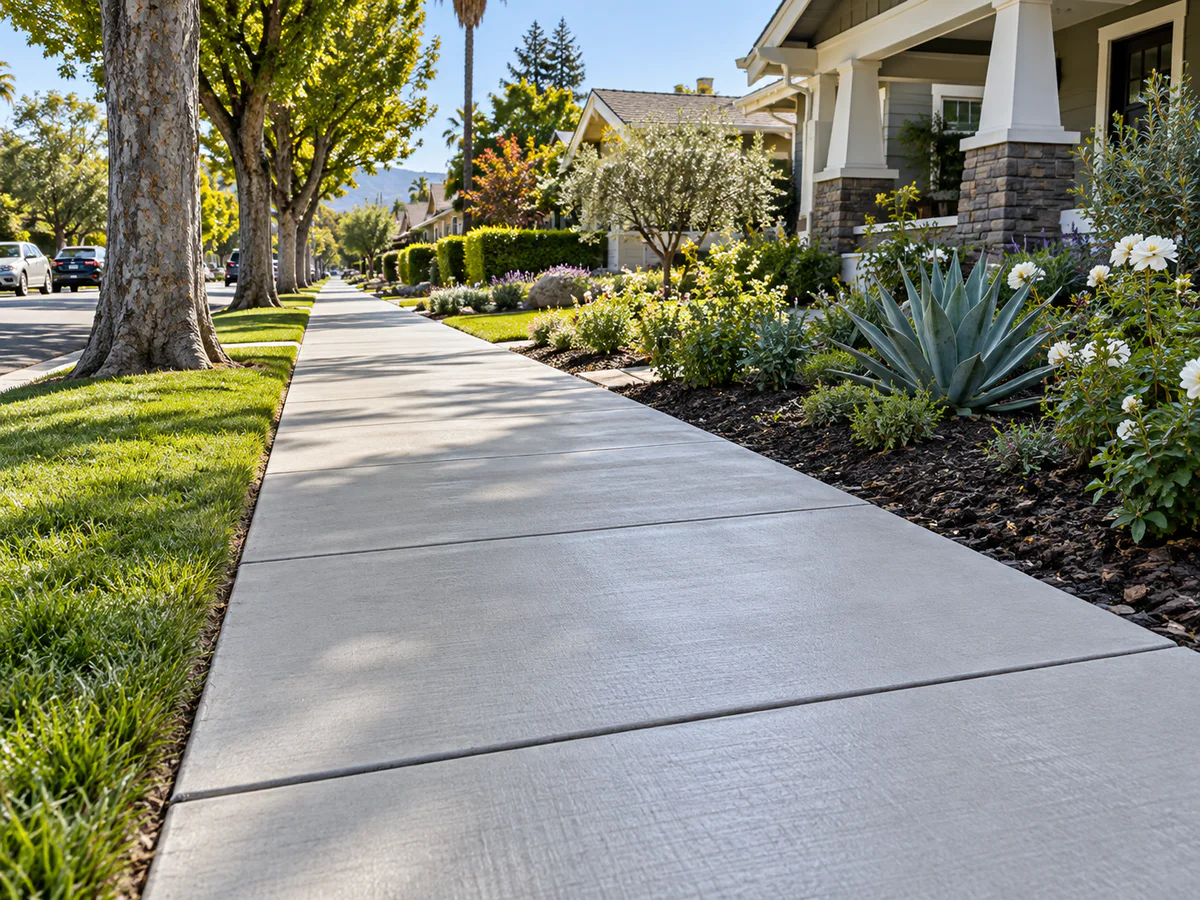
Sidewalk deterioration in Los Angeles is driven by specific local conditions that affect concrete performance over time.
Mature trees along sidewalks push roots beneath the concrete, lifting and cracking individual panels. This is one of the most common sidewalk problems in older Los Angeles neighborhoods with established landscaping.
When the subgrade beneath one panel settles differently from adjacent sections, the result is uneven surfaces with height differences at joints. This creates trip hazards and affects drainage flow.
Age, UV exposure, heavy use, and improper original construction contribute to surface cracking, spalling, and erosion. Joints that are too far apart or cut too shallow allow uncontrolled cracking patterns.
Sidewalk projects require attention to grade transitions, drainage, joint placement, and connections between existing concrete surfaces. Each walkway section must align with adjacent panels and maintain a consistent, safe walking surface.
For sidewalk work within the public right-of-way, additional requirements — including permits, specific concrete specifications, and inspection by the applicable jurisdiction — may apply. Private contractors cannot perform unrestricted work in a public right-of-way without applicable approvals.
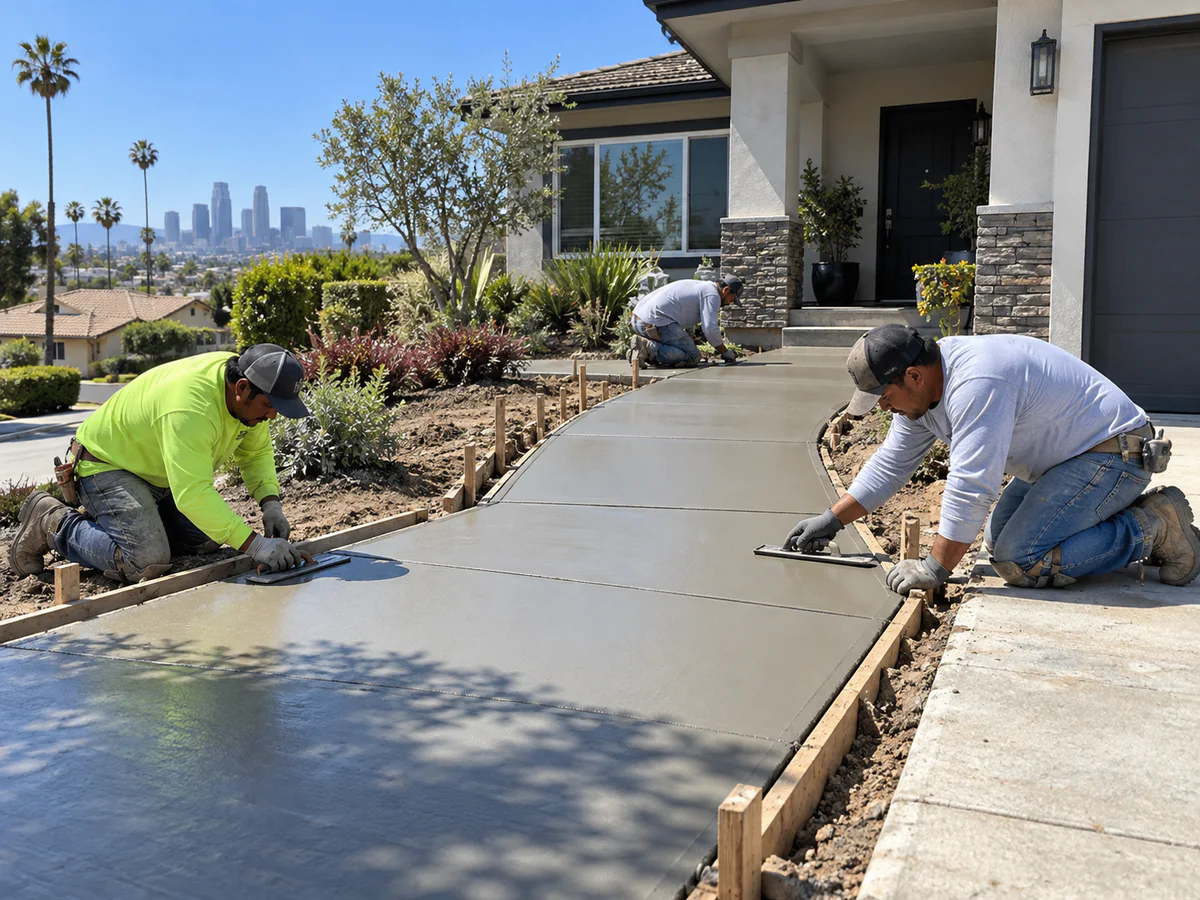
Sidewalk work requires precision at every joint and grade transition to maintain a safe, functional walking surface.
Evaluate existing sidewalk condition, identify root interference, settlement, and drainage issues. Plan section layout and grade transitions.
Demolish damaged sections, address root intrusion where applicable, grade the subgrade, and compact base material for each panel.
Set forms with accurate grade matching to adjacent sections. Place concrete, screed to grade, and apply broom finish for pedestrian use.
Cut control joints, protect the surface during curing, remove forms, and clean up the work area.
In most cases, yes. Individual panels can be removed and replaced without disturbing adjacent sections. The key is ensuring the cause of damage — such as root intrusion or subgrade settlement — has been addressed before placing new concrete.
Uneven sidewalks typically result from tree root growth pushing panels upward, soil settlement beneath the slab, poor original compaction, or drainage erosion washing away subgrade material. Each condition requires specific corrective action before new concrete can perform properly.
Yes. Tree roots growing beneath sidewalk panels can lift, crack, and displace concrete. In Los Angeles, this is common with mature street trees and yard trees planted near walkways. Root management — such as trimming, root barriers, or rerouting the walkway — may be part of the repair plan.
Control joints define where the concrete is designed to crack during shrinkage. Properly placed joints prevent random cracking across the slab surface. For sidewalks, joints are typically placed at regular panel intervals to create manageable, individual sections that can move independently.
Sidewalk work within the public right-of-way — including city sidewalks and curbs — may require permits, specific specifications, and inspection by the applicable jurisdiction. Private walkway work on residential property may have different requirements depending on the scope. Permit needs are evaluated during project planning.
Whether you need new walkway construction, sidewalk section replacement, or an evaluation of uneven or damaged concrete — contact our team to discuss your project.