Los Angeles, CA • Serving Los Angeles County
Professional Concrete Services in Los Angeles

Concrete Contractors Los Angeles CA — Professional Concrete Services

Concrete installation, repair, and replacement for residential and commercial properties across Los Angeles. From driveways and patios to foundations and full slab work — built on proper preparation, clear planning, and durable construction methods.

Los Angeles
Service Area
6
Core Concrete Services
Residential
& Commercial Projects
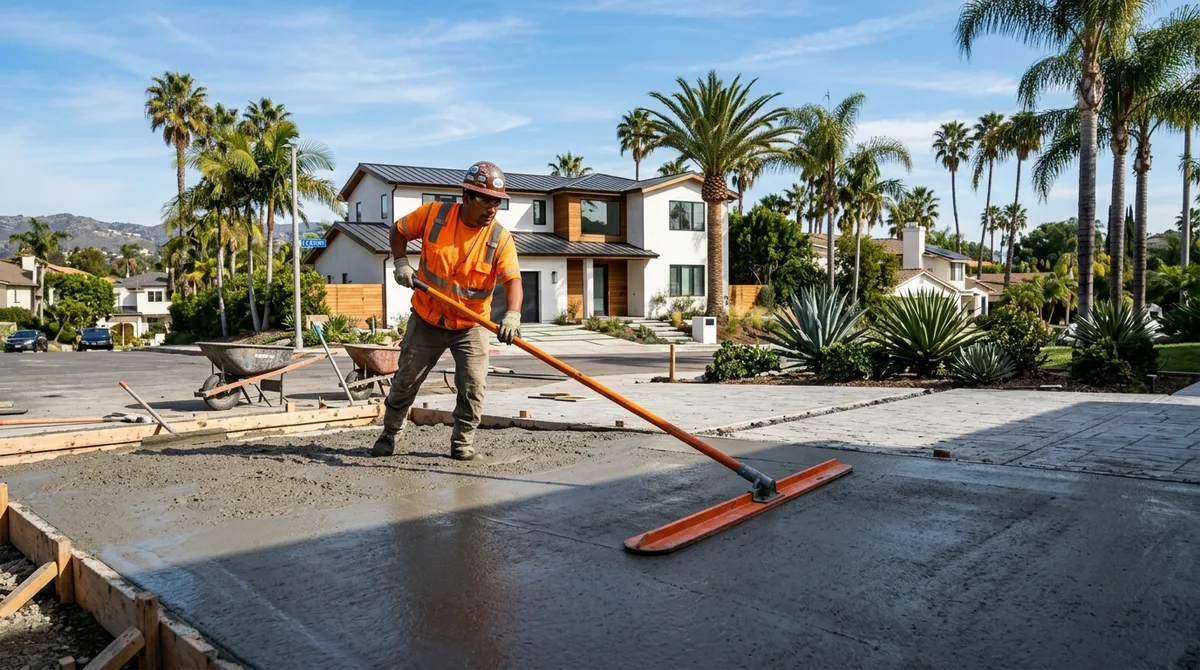
Professional concrete contractor smoothing wet concrete with a bull float on a residential driveway in Los Angeles, CA

Los Concrete Contractors

Concrete work starts with understanding what the project actually requires. Before any material arrives on site, the existing conditions need to be evaluated — the soil, the drainage, the grade, the intended use, and the condition of any concrete that may need to be removed. That evaluation shapes every decision that follows, from base preparation and formwork to reinforcement, concrete placement, finishing, and joint layout.

We handle concrete installation, replacement, and repair for properties throughout Los Angeles, California. Our approach centers on proper site preparation, clear communication about scope, and construction practices designed to produce concrete that performs under real-world conditions — sun exposure, vehicle loads, foot traffic, and seasonal rain. Whether the project involves a residential driveway, a backyard patio, commercial slabs, or a foundation that requires coordination with structural plans, each project receives individual evaluation and planning.

Concrete Services for Los Angeles Properties

From initial site evaluation through final cleanup, our team handles each phase of your concrete project with clear planning and documented workmanship.

Concrete Installation Built Around Proper Site Preparation

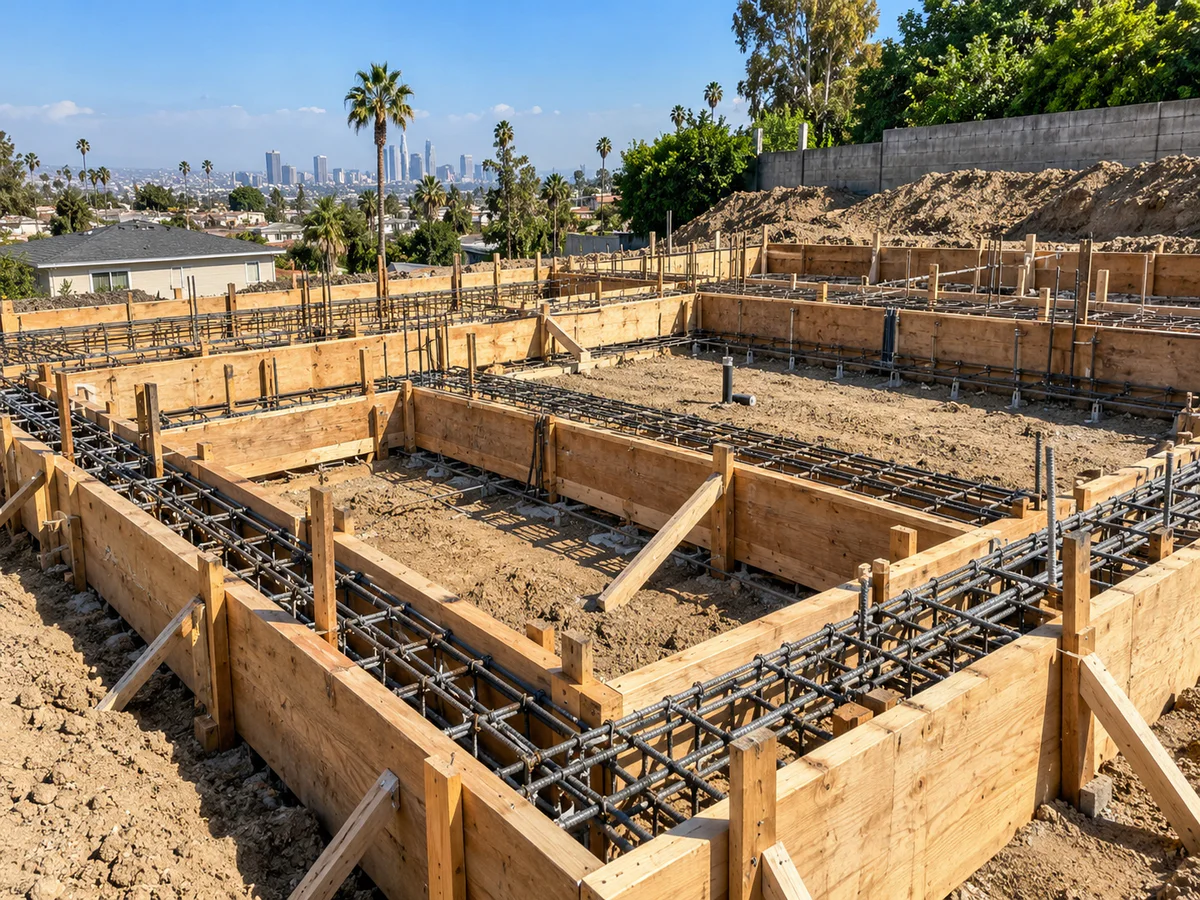
The performance of any concrete surface depends heavily on what happens before concrete is placed. Subgrade condition, base material, compaction, drainage, and formwork accuracy all directly influence how the finished concrete performs over time.

In Los Angeles, site conditions vary significantly from property to property. Soil type, existing hardscape, drainage patterns, slope, and access constraints all factor into how preparation needs to be handled. A driveway on a flat lot in the San Fernando Valley requires different preparation than a hillside walkway in the Hollywood Hills or a commercial slab near Downtown.

Evaluating Existing Site Conditions

Before work begins, the existing conditions are evaluated. This includes the soil, drainage flow, existing concrete that may need removal, tree roots near the work area, and access for equipment and material delivery. This evaluation helps determine the appropriate preparation and construction approach.

Preparing the Subgrade and Base

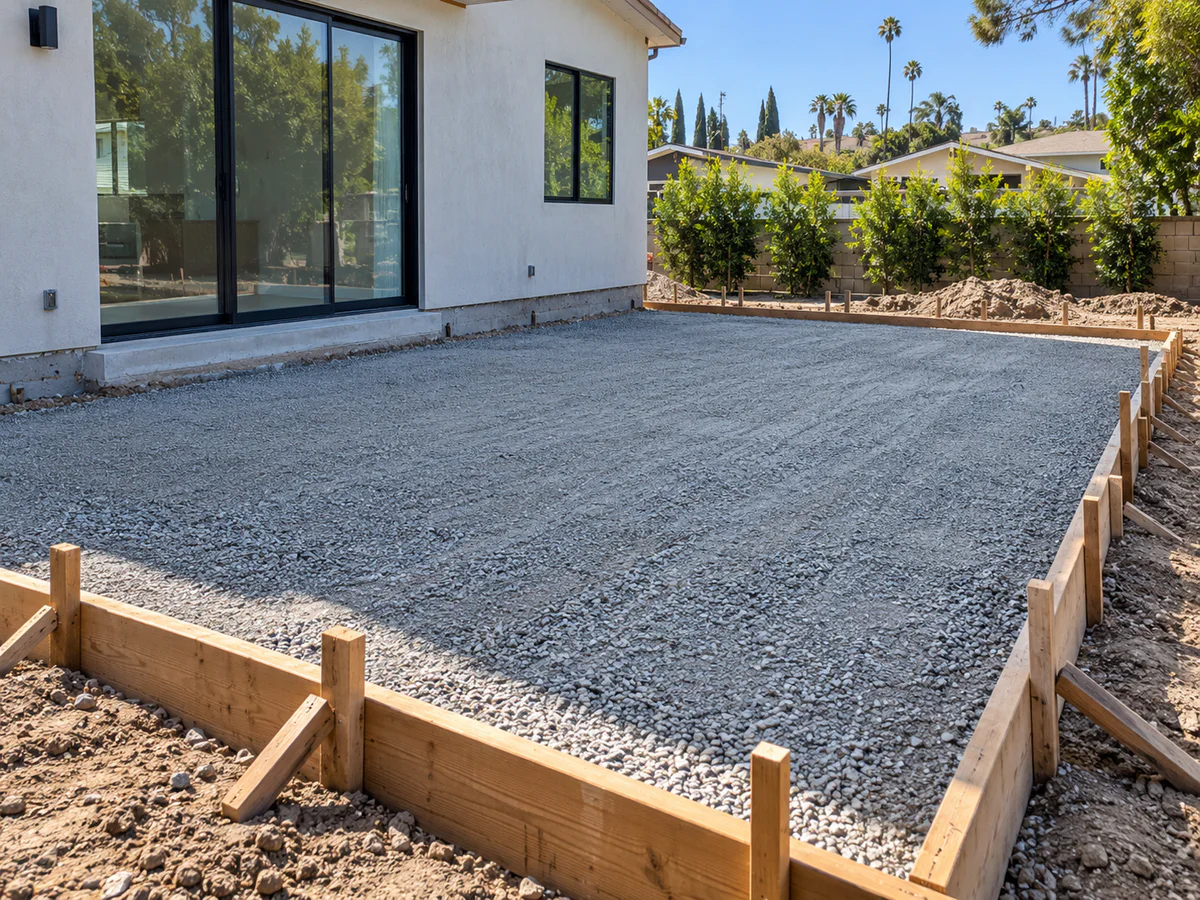
The subgrade — the native soil beneath the concrete — must be stable and properly graded. Where needed, unsuitable material is removed and replaced with compactable base material. Compaction reduces the risk of settlement after the concrete is placed. The base layer provides a consistent, load-bearing surface for the concrete slab.
Concrete base preparation and subgrade compaction at a Los Angeles residential project site

Formwork and Layout

Forms define the shape, grade, and thickness of the concrete. Accurate form placement ensures the slab meets the planned dimensions, maintains proper drainage slope, and aligns with existing structures, walls, and property features. Forms must be secure enough to withstand the weight and pressure of fresh concrete during placement.

Reinforcement Where Required

Depending on the project, reinforcement such as rebar or welded wire may be placed within the forms. The type, size, and spacing of reinforcement depend on the intended use, anticipated loads, site conditions, and applicable project specifications. Foundation and structural concrete projects may require specific reinforcement based on approved engineering plans.

Concrete Placement and Finishing

Concrete is placed, consolidated, screeded to grade, and then finished according to the selected surface treatment. Broom finish provides a textured, slip-resistant surface commonly used for driveways and sidewalks. Smooth finishes and decorative treatments may be available depending on the project scope. Finishing must be completed within the concrete's working window — a process that requires experience, especially in Los Angeles heat, where surface moisture can evaporate rapidly.

Joint Planning and Curing

Control joints are placed at planned intervals to help manage shrinkage cracking. The spacing, depth, and pattern of control joints are determined by slab thickness, layout, and intended use. After finishing, concrete must cure properly. Premature drying — particularly under direct Southern California sun — can weaken the surface and increase the likelihood of cracking, scaling, or surface wear.

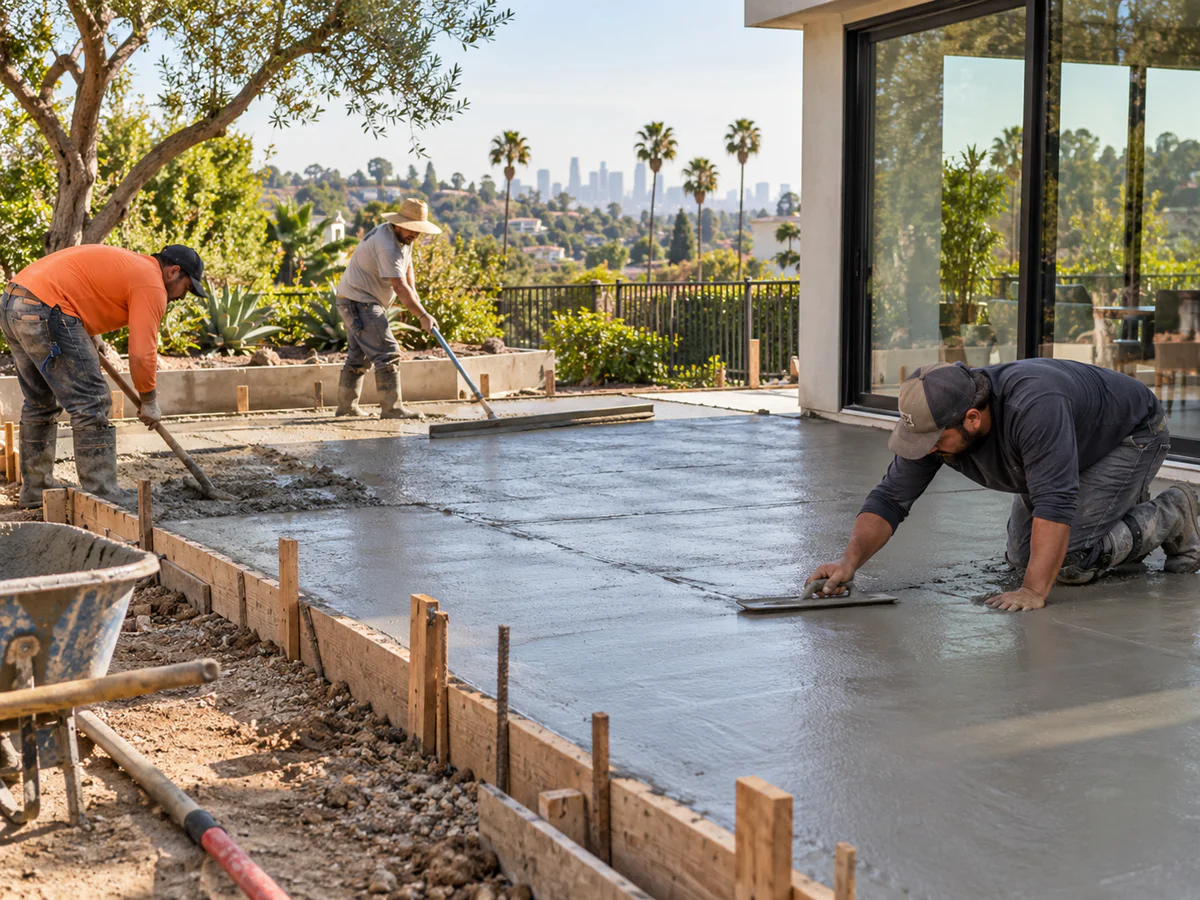
Concrete placement and broom finishing at a residential site in Los Angeles, California

What Affects the Cost of Concrete Work in Los Angeles?

Concrete project pricing depends on the actual scope of work — not on generic per-square-foot estimates that ignore site-specific conditions. Every property presents different access constraints, existing conditions, demolition needs, and preparation requirements that directly affect the cost of the project.

Rather than providing unreliable pricing before understanding the project, we evaluate the site and provide a clear scope of work with documented pricing that reflects the actual requirements.

Project size, layout, and concrete volume
Demolition and removal of existing concrete
Site access, equipment requirements, and haul-away
Excavation, subgrade, and base preparation
Concrete thickness, reinforcement, and specifications
Surface finish, drainage, and grading requirements
Permits and engineering coordination where applicable
Concrete project evaluation and scope planning for a residential property in Los Angeles, CA

Our Concrete Project Process

Each project follows a structured process — from the initial discussion through final cleanup — designed to keep the scope clear and the work organized.

01

Initial Project Discussion

We discuss the project scope, intended use, timeline, and any specific requirements. This helps determine whether a site visit is the appropriate next step.

02

Site Evaluation

The project site is evaluated in person. Soil, drainage, existing concrete, access, grade, and any condition that may affect preparation or construction is documented.

03

Scope and Preparation

Based on the evaluation, a clear scope of work is prepared. This includes demolition, base preparation, formwork, reinforcement, concrete specifications, and finishing details.

04

Forms and Base Work

Existing concrete is removed where required. The subgrade is prepared and compacted. Base material is placed and leveled. Forms are set to the planned grade, dimensions, and slope.

05

Concrete Placement

Concrete is placed within the forms, consolidated to reduce air voids, and screeded to the planned grade. Timing and coordination are critical during this phase.

06

Finishing

The surface is finished to the selected texture — broom, smooth, or decorative where offered. Control joints are cut at planned intervals to manage shrinkage.

07

Curing

Concrete is protected during the curing period. Proper curing is especially important in Los Angeles, where heat and low humidity can cause rapid moisture loss from the surface.

08

Cleanup and Final Review

The project site is cleaned, forms are removed, and the completed work is reviewed. Any questions about use, loading, or maintenance are addressed before the project is closed.

Residential Concrete Services

Residential concrete projects in Los Angeles range from straightforward driveway replacements to complete backyard transformations involving patios, walkways, and slab work. Many residential properties in Los Angeles County were built decades ago, and the original concrete may have deteriorated due to age, tree root movement, poor drainage, or settlement over time.

Common residential concrete work includes driveway installation and replacement, backyard patio construction, walkway and path replacement, garage slab work, and localized concrete repairs. Each project is evaluated individually — what works for one property may not be the right approach for another based on lot size, access, soil conditions, and how the space is used.

Commercial Concrete Services

Commercial concrete projects often require coordination with property managers, building owners, or general contractors. These may include loading areas, pedestrian walkways, equipment pads, parking lot sections, or ADA-related concrete work where applicable. Commercial projects may involve specific concrete specifications, engineering coordination, or permit requirements depending on the scope and jurisdiction.

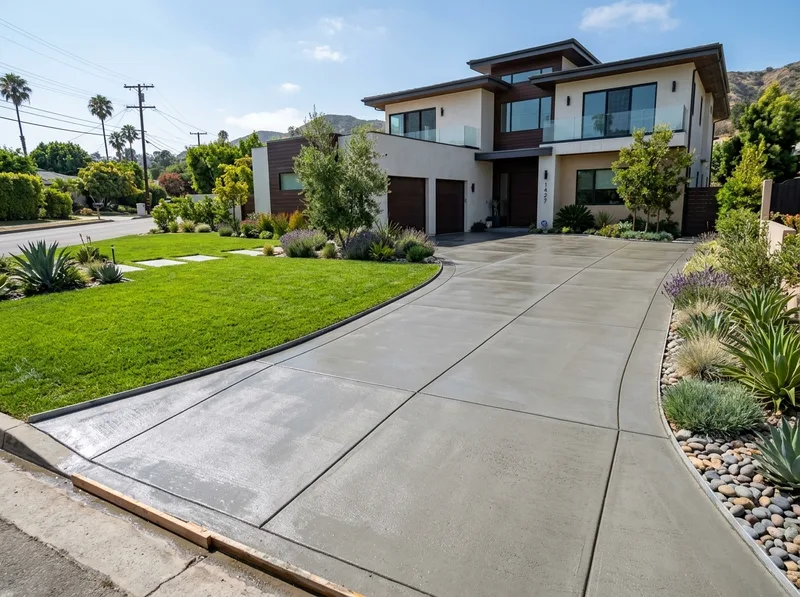
Completed residential concrete patio project in a Los Angeles neighborhood

Concrete Finishes and Surface Options

The finish applied to a concrete surface affects both its appearance and its performance under foot traffic, vehicle use, and weather exposure.

Broom-Finished Concrete

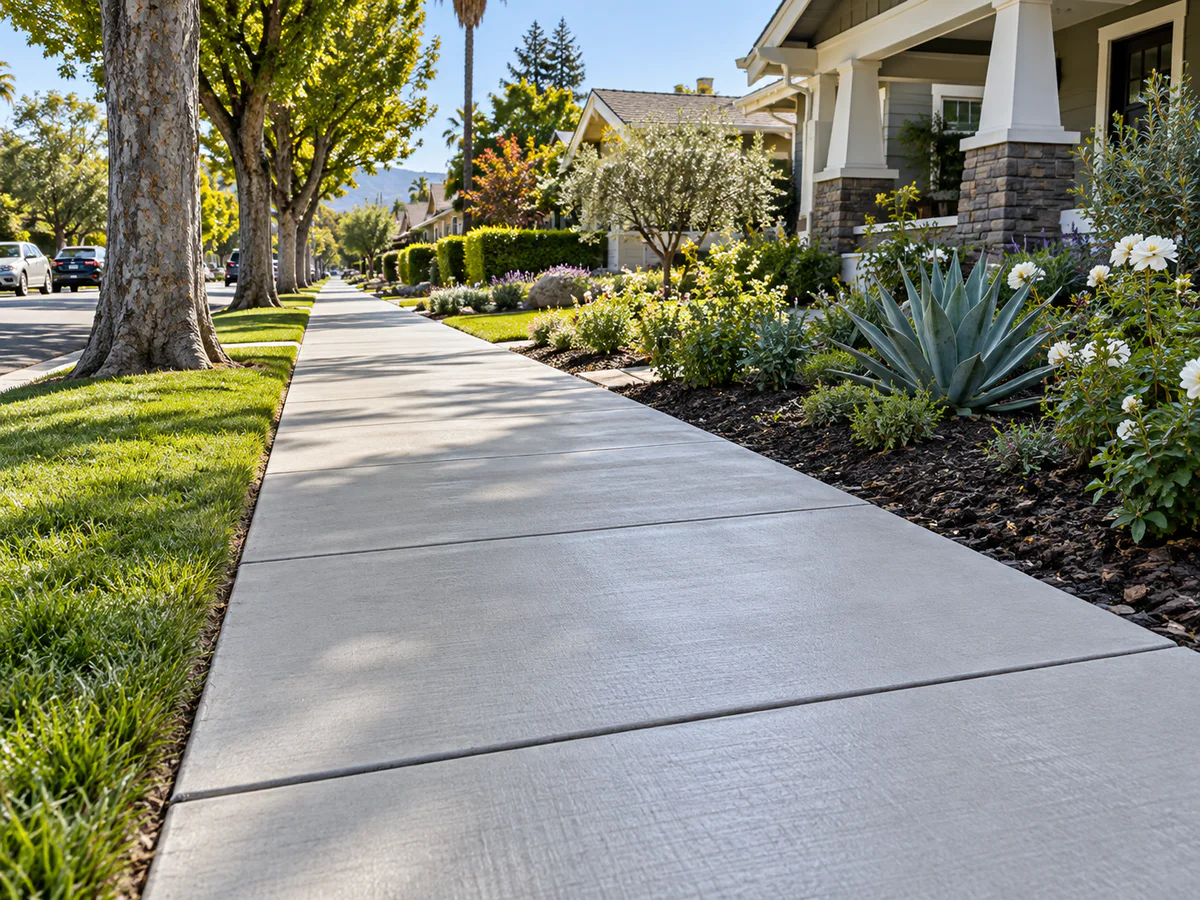
Broom finish produces a textured surface with consistent traction. It is the most common finish for driveways, sidewalks, and patios — practical for wet conditions and daily use across Los Angeles properties.

Smooth Concrete Where Appropriate

Smooth or troweled finishes create a clean, uniform surface. They may be suitable for interior slabs, garage floors, or specific applications where slip resistance is managed through other means.

Decorative Concrete Where Offered

Decorative options — including stamped concrete, colored concrete, and exposed aggregate — may be available depending on the project scope. Decorative work requires additional planning, materials, and construction time.

Common Reasons Concrete Deteriorates

Concrete does not fail randomly. Deterioration develops from specific causes — and identifying those causes is the first step toward determining whether repair or replacement is appropriate.

Cracking

Shrinkage cracks, settlement cracks, and structural cracks each develop differently. Proper joint spacing, base preparation, and curing reduce cracking risk — but some cracking is expected in most concrete.

Settlement or Movement

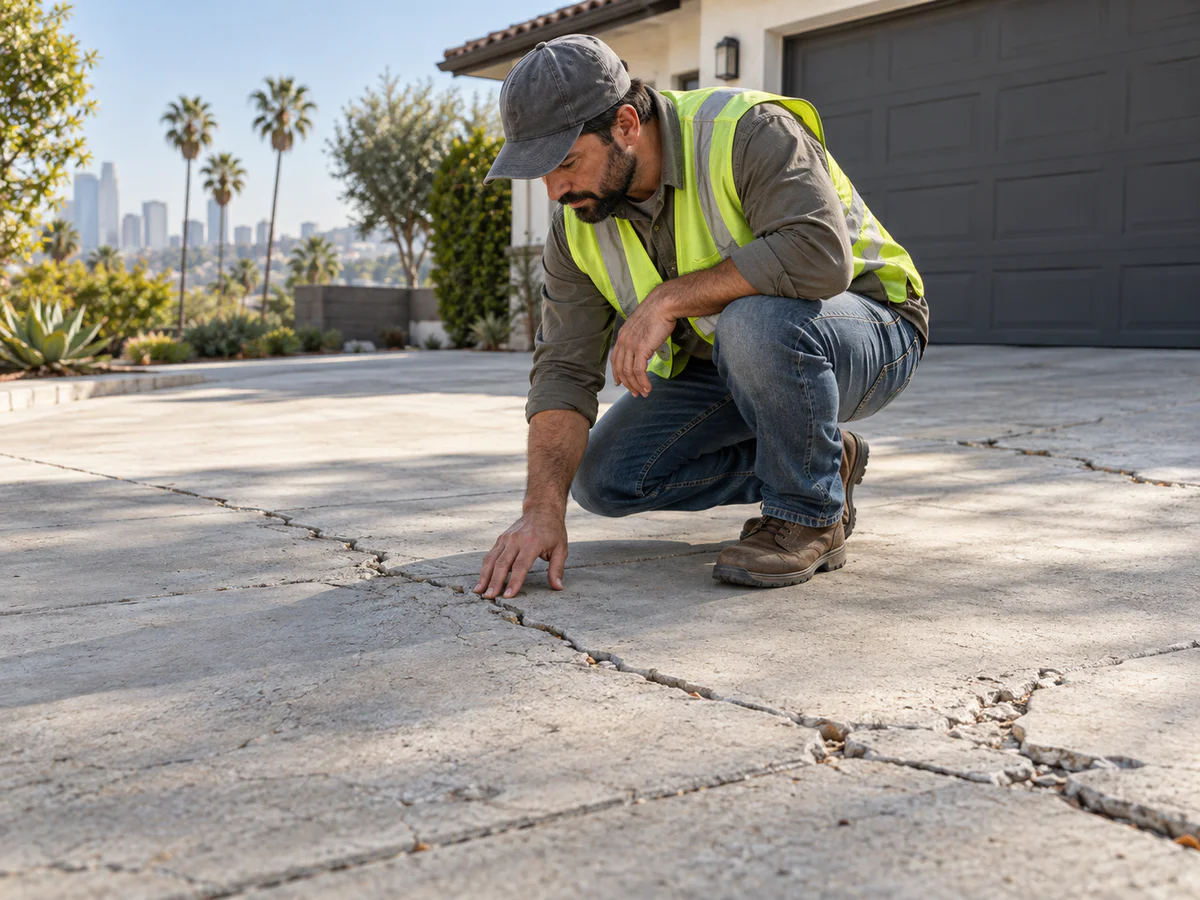
When the subgrade beneath the slab shifts, compresses unevenly, or was not properly compacted, the concrete above may settle, tilt, or crack. This is common in areas with expansive or poorly compacted soil.

Poor Drainage

Water that pools on, under, or near concrete can erode subgrade material, accelerate surface deterioration, and contribute to movement. Proper grading and drainage planning are essential during installation.

Surface Wear

Over time, heavy use, UV exposure, and weather can wear the concrete surface. Scaling, spalling, and surface erosion may develop — particularly where curing was insufficient or the surface was overworked during finishing.

Joint Failure

Control and expansion joints manage movement within the slab. When joints are placed too far apart, cut too shallow, or filled with incompatible material, they may fail and allow uncontrolled cracking.

Improper Previous Repairs

Patches applied without addressing the cause of the original damage often fail again. Mismatched repair materials, poor surface preparation, and unresolved drainage problems contribute to repeated failure.

Heavy Loads

Concrete designed for light residential foot traffic may crack under heavy vehicle loads. Thickness, reinforcement, and base preparation must match the intended use of the surface.

Root or Ground Movement

Tree roots growing beneath slabs can lift and crack concrete over time. In Los Angeles, mature trees near walkways and driveways are a common factor in sidewalk and driveway damage.

Concrete Repair vs Replacement

Not every concrete problem requires full replacement, and not every crack can be permanently repaired. The right decision depends on the cause of the damage, the extent of deterioration, and whether the underlying conditions can be corrected.

Repair may be appropriate when damage is localized, the surrounding concrete remains in serviceable condition, the underlying cause can be addressed, and a compatible repair method exists for the type of damage present.

Replacement may be more practical when deterioration is widespread, large sections have significant movement, the base or subgrade has failed, or previous repairs have repeatedly failed. In many cases, attempting to patch extensively damaged concrete delays the inevitable and results in additional cost.

A proper evaluation identifies the cause and extent of the damage before recommending either path. Learn more about our concrete repair services for Los Angeles properties.

Concrete repair evaluation on a cracked and damaged driveway in Los Angeles, California

Drainage, Grading, and Concrete Planning

In Los Angeles, concrete surfaces need to shed water effectively — even though rain may only occur during certain parts of the year. When it does rain, the volume and intensity can overwhelm concrete surfaces that were not properly graded or connected to adequate drainage.

Proper grading ensures water flows away from structures, does not pool on the concrete surface, and reaches appropriate drainage points. Drainage planning should be part of every concrete installation — not an afterthought addressed after problems develop.

For driveways, patios, and walkways, the slope must be sufficient to move water without creating runoff problems for adjacent properties. For slabs near structures, water must be directed away from building foundations. Failure to plan drainage during concrete installation is one of the most common causes of premature deterioration and structural damage to adjacent improvements.

Drainage grading and slope planning during concrete installation at a Los Angeles property

Concrete Work and Local Requirements

Permit Considerations Where Required

Some concrete projects in Los Angeles may require permits depending on the scope, location, and type of work. The Los Angeles Department of Building and Safety administers building permits within the City of Los Angeles. Other jurisdictions within Los Angeles County may have separate requirements. Permit needs should be evaluated based on the specific project before work begins.

Property-Line and Site Considerations

Concrete work near property lines, shared driveways, or adjacent structures requires careful planning. Setback requirements, easements, and neighbor considerations may affect the scope, layout, or timing of the project.

Public Right-of-Way Work Where Applicable

Sidewalk and curb work within the public right-of-way may involve additional requirements, including permits, specific concrete specifications, and inspection by the applicable jurisdiction. Private contractors cannot perform unrestricted work in a public right-of-way without applicable approvals.

Structural or Engineering Requirements Where Applicable

Foundation work, retaining structures, and certain slab installations may require engineering plans, structural calculations, and specific reinforcement based on approved plans and applicable building requirements. Where engineering is required, project-specific requirements depend on site conditions, intended load, and qualified professional evaluation.

Concrete Services Throughout Los Angeles

We serve residential and commercial properties across Los Angeles and surrounding communities within Los Angeles County.

Hollywood
Silver Lake
Echo Park
Los Feliz
Eagle Rock
Highland Park
Koreatown
Mid-City
West Adams
Atwater Village
Boyle Heights
South LA

Los Angeles Concrete Questions

Answers to questions we frequently receive from property owners planning concrete projects in Los Angeles.

Concrete curing time depends on the mix, weather conditions, slab thickness, and intended use. Light foot traffic is typically possible within a day or two, but vehicle use generally requires a longer curing period. Specific timelines are provided with each project based on conditions and contractor recommendations. In Los Angeles, hot and dry conditions may require protective measures during curing to prevent premature surface drying.

In many cases, yes. If the damage is localized and the surrounding concrete is in serviceable condition, individual sections can be removed and replaced. The key is evaluating whether the cause of the damage — such as subgrade movement, drainage, or root intrusion — has been addressed. If the underlying problem remains, new concrete placed in the same area is likely to develop similar issues.

Concrete cracking results from multiple potential causes: shrinkage during curing, subgrade settlement, heavy loading beyond the slab's capacity, tree root movement, poor joint spacing, inadequate base preparation, or thermal expansion. Some minor cracking — particularly fine shrinkage cracking — is expected in most concrete. The concern is when cracking indicates deeper problems such as subgrade failure, structural movement, or drainage-related erosion.

Permit requirements depend on the scope and type of work. Foundation work, structural concrete, and work within the public right-of-way may require permits through the Los Angeles Department of Building and Safety or the applicable jurisdiction. Routine flatwork replacement may not require permits in all cases, but requirements can vary. We evaluate permit needs as part of the project planning process.

Concrete project pricing reflects the actual scope: demolition, haul-away, excavation, base preparation, formwork, reinforcement, concrete volume, thickness, finish, drainage, grading, permits, and access conditions. Generic per-square-foot pricing does not account for the wide range of variables that affect the real cost of the project. A site evaluation and documented scope provide accurate project-specific pricing.

Repair addresses localized damage without removing the entire slab — patching cracks, replacing a single section, or correcting surface deterioration. Replacement involves removing the existing concrete, preparing the base, and placing entirely new concrete. The decision depends on the extent and cause of the damage. When deterioration is widespread, or when the underlying subgrade has failed, replacement is often more practical than repeated patching.

Discuss Your Concrete Project

Whether you need a new driveway, patio, walkway, foundation, slab, or concrete repair — our team evaluates the site, provides a clear scope, and builds concrete designed to perform under Los Angeles conditions.

Request Estimate