Crack repair, spalling correction, partial and full slab replacement for residential and commercial properties in Los Angeles. We evaluate the cause before recommending repair — because surface patching alone does not address underlying problems.
Concrete repair starts with identifying what caused the damage — not just covering the visible symptom. A crack in a driveway may be a minor shrinkage crack that can be managed, or it may indicate subgrade failure that will continue worsening regardless of how many times the surface is patched.
In Los Angeles, concrete damage commonly results from tree root growth, soil settlement, poor original construction, drainage problems, UV exposure, and heavy use. Each cause requires a different corrective approach. Patching a crack caused by root intrusion without addressing the roots will result in the same damage recurring.
Our evaluation process identifies the type of damage, the likely cause, the extent of affected area, and whether the underlying conditions can be corrected. Based on that evaluation, we recommend either targeted repair or replacement — whichever approach is more practical and more likely to produce a lasting result. Learn more about our full range of concrete services in Los Angeles.
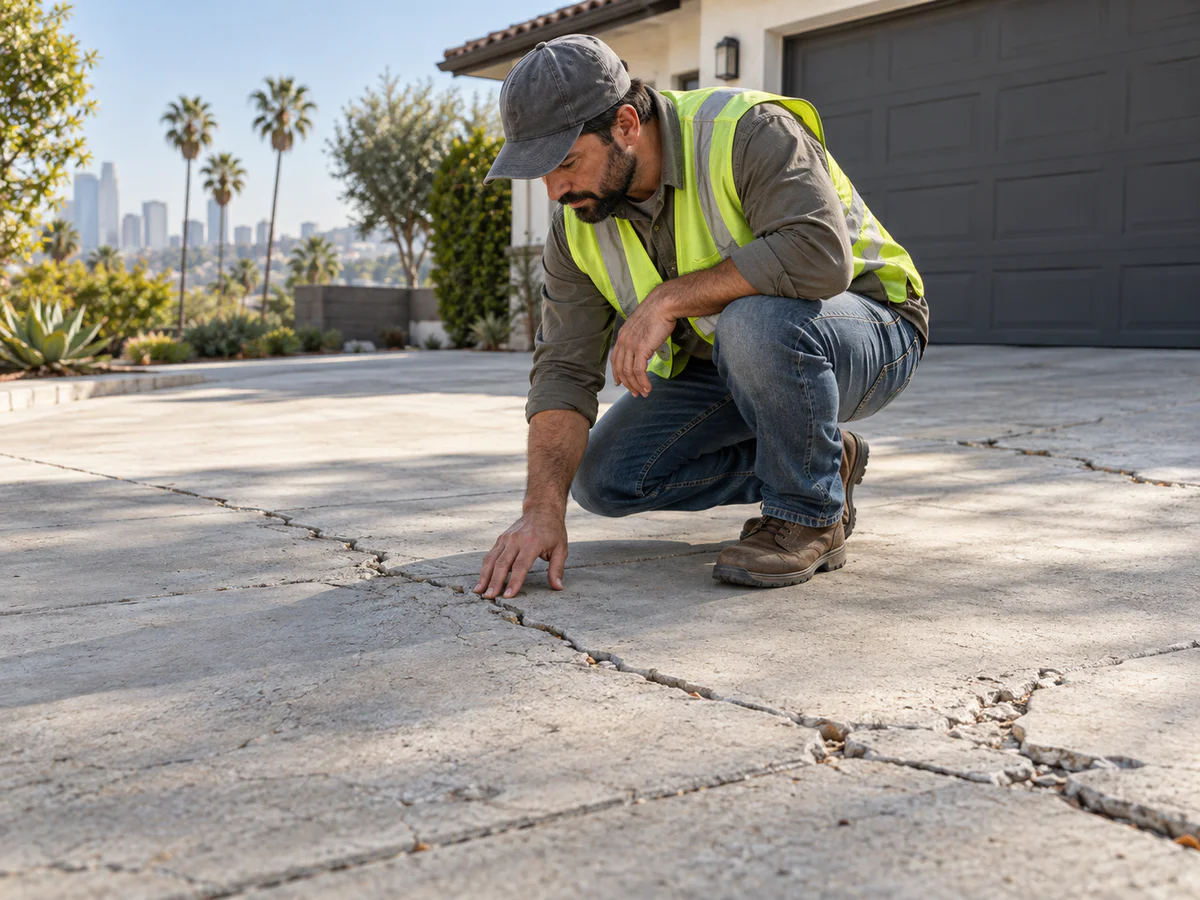
Different types of damage require different repair approaches. Understanding what you are dealing with is the first step.
Fine shrinkage cracks are normal in most concrete. Wide cracks, cracks with vertical displacement, or cracks that continue to grow may indicate subgrade movement, overloading, or structural issues requiring more than surface repair.
Spalling occurs when the concrete surface flakes, chips, or peels away. This often results from inadequate curing, surface overwork during finishing, freeze-thaw cycles in some areas, or deicing chemical exposure.
When slabs sink, tilt, or lift, the problem is beneath the concrete — not in the concrete itself. Settlement indicates subgrade compression, erosion, or root intrusion that must be addressed before repair can be effective.
When control or expansion joints fail — from improper depth, spacing, or filler material — uncontrolled cracking develops. Joint repair may involve resealing, recutting, or replacing the affected section.
Concrete edges are vulnerable to chipping and crumbling, especially along driveways and walkways without proper edge support. Drainage erosion can undermine edges and accelerate deterioration.
Patches and repairs that were applied without addressing the root cause often fail again. Mismatched materials, poor adhesion, and unresolved subgrade problems contribute to repeated patch failure.
Not every concrete problem needs full replacement, and not every crack can be permanently repaired. The right decision depends on the cause, the extent, and whether the underlying conditions are correctable.
Our evaluation identifies which approach is more appropriate. For related needs, see our driveway services or sidewalk services.
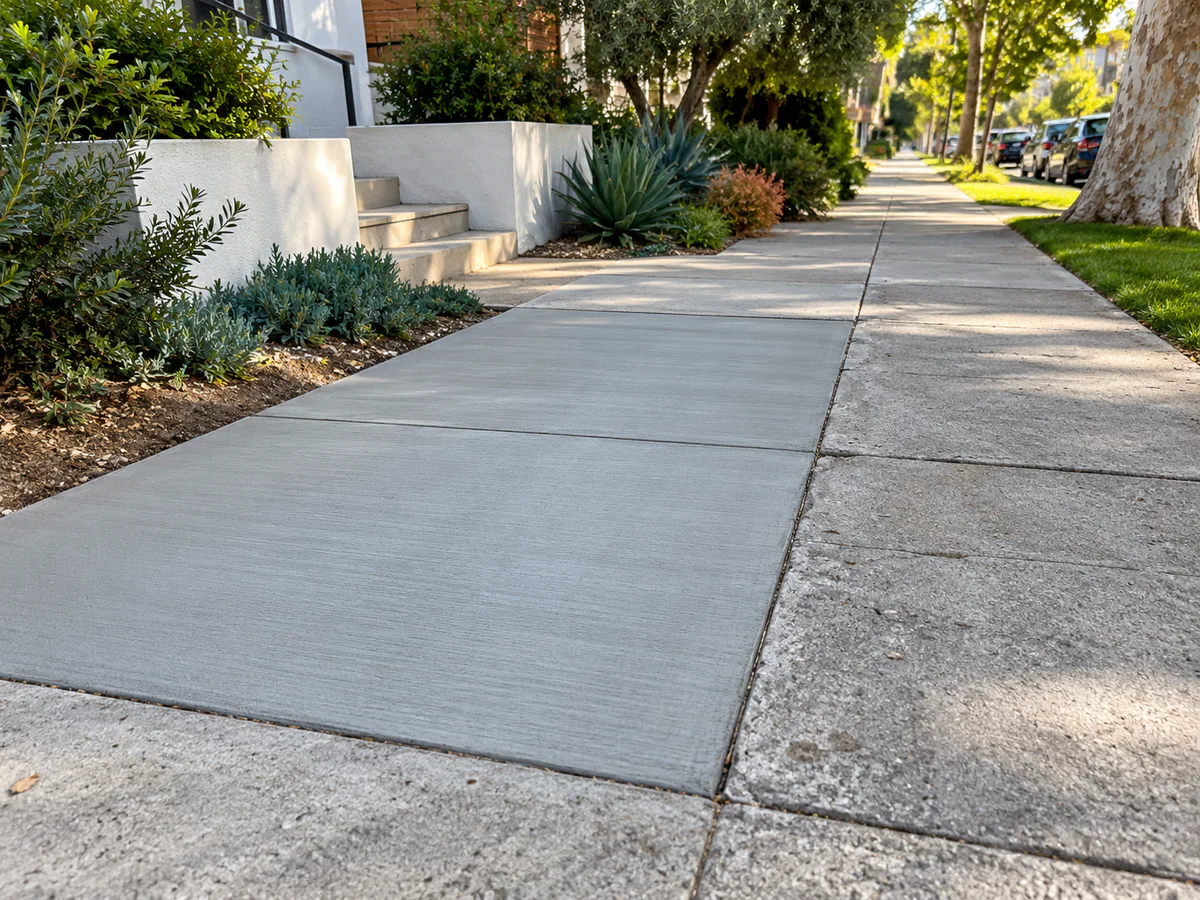
Every repair begins with understanding the problem — not covering it up.
Identify the type, extent, and cause of the concrete damage. Determine whether conditions beneath the surface need correction.
Recommend repair, partial replacement, or full replacement based on the evaluation. Provide a clear scope of work and approach.
Correct underlying issues — roots, drainage, subgrade failure — before applying any repair or placing new concrete.
Perform the repair or replacement with proper preparation, compatible materials, and appropriate finishing and curing.
It depends on the type and cause of cracking. Minor shrinkage cracks may be manageable with appropriate sealants or fillers. But if cracking results from subgrade failure, root intrusion, or widespread structural movement, surface repair alone may not provide a lasting solution. Evaluation identifies the right approach.
Patches fail when the underlying cause was not addressed, when incompatible repair materials were used, when the existing concrete surface was not properly prepared for adhesion, or when the patched area continues to move due to ongoing subgrade problems beneath the slab.
Replacement is typically more practical when deterioration is widespread, when large sections have significant settlement, when the base has failed, or when previous repairs have repeatedly failed. Attempting to patch extensively damaged concrete often delays the inevitable and results in additional cost over time.
The longevity of a repair depends on whether the underlying cause was corrected, whether compatible materials were used, and whether the repair area is subject to ongoing stress or movement. A properly executed repair that addresses the root cause should perform for an extended period. A patch applied over an uncorrected problem may fail quickly.
New concrete will not perfectly match the color of existing concrete. Over time, both old and new sections weather and change color, and the difference becomes less noticeable. An exact color match between fresh and aged concrete is not achievable due to differences in age, exposure, and curing conditions.
Whether your concrete has cracks, spalling, settlement, or failed previous repairs — contact our team to schedule an evaluation and determine the right repair approach.